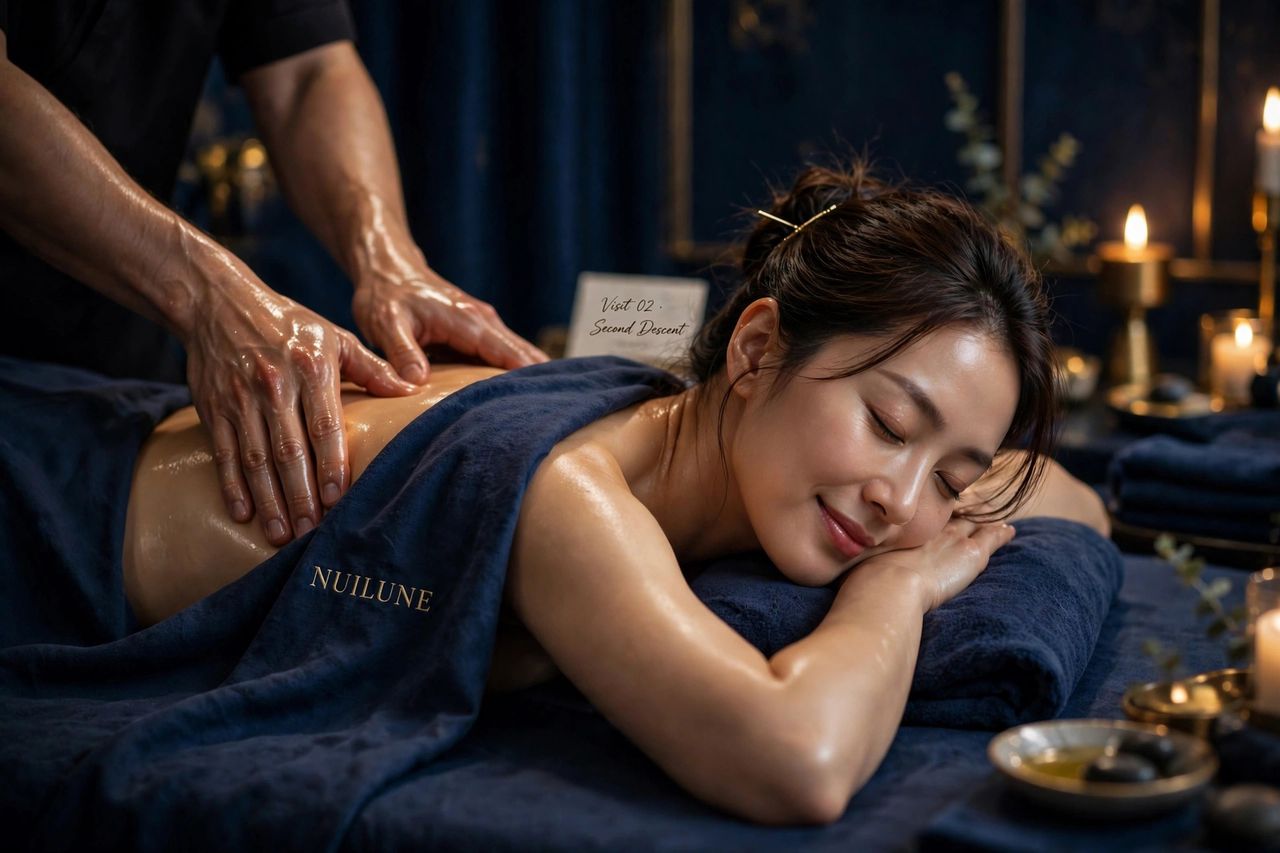
The Second Visit Is Different
Every regular at the maison says some version of the same sentence: the first visit was wonderful; the second was the one. The house has thought about why, and the answer begins with arithmetic. On a first visit, a woman spends a portion of her attention on the unknown — the room, the ritual, the man, herself in this unfamiliar situation. That attention is well spent. It is also attention the second visit refunds in full.
On the second visit she arrives already knowing the geography: the tea, the warmth, the order of things. Her preferences are on file — pressure, scent, tempo, the boundary she stated once and never has to state again. The conversation that took twenty minutes the first time takes four, and the reclaimed sixteen go directly into the ritual.
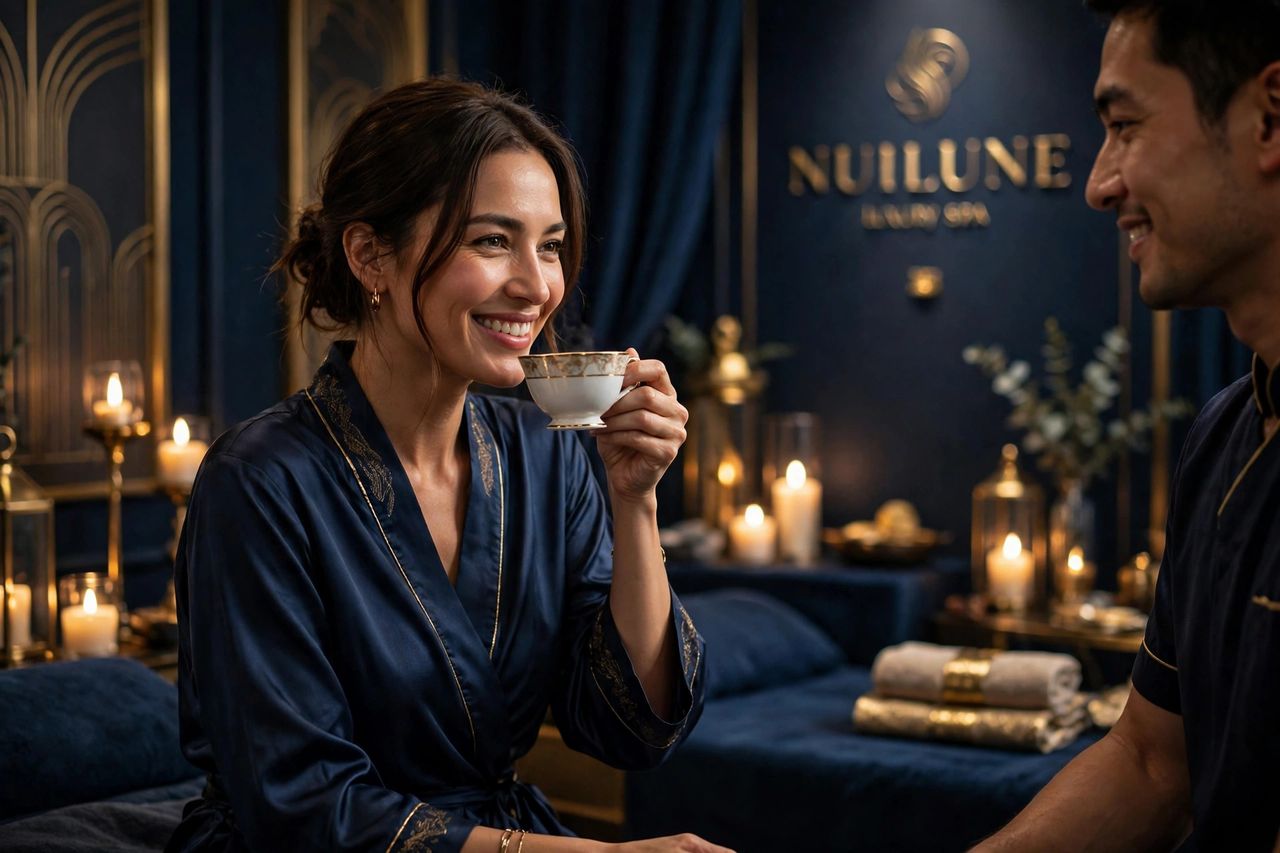
There is also the matter of trust's compound interest. A body that has verified — once, completely — that nothing will be taken and anything may stop, does not spend the second evening guarding. What women describe is a faster descent: the shoulders let go in minutes instead of half an hour, and the ritual reaches depths the first visit only pointed at.
The house changes its side of the bargain too. A practitioner who has read her body once works from knowledge, not hypothesis — where she holds, how she answers, what tempo her breathing asks for. Regulars are also offered the maison's longer formats first: the unhurried 150 and 180 minutes, the sensory ritual layered over the standard, the full-day retreat that first-timers are gently steered away from.
None of this is an argument against the first visit, which has its own irreplaceable electricity — the electricity of a door opening. It is simply the house's honest observation, confirmed by every standing booking on its calendar: a woman's first evening teaches her body that it is safe. Her second teaches it what safe is for.